HUMAN 2.0


JOURNAL

FEATURED ARTICLES

{{brizy_dc_image_alt entityId=
The Human 2.0 Manifesto
The Human 2.0 Manifesto The next revolution is emotional. Machines accelerate logic. Humans must anchor meaning. Identity, coherence, and presence are now the defining human capabilities.
{{brizy_dc_image_alt entityId=
Why Culture Will Define the Age of Intelligence
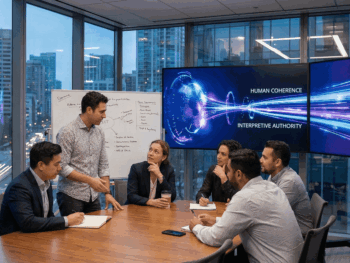
Culture will define the age of intelligence because machines can scale cognition, but only humans can scale coherence. Technology expands what is possible. Culture determines what is inhabitable.

The Human 2.0 Manifesto


The next revolution is emotional.


Machines accelerate logic. Humans must anchor meaning.


Identity, coherence, and presence are now the defining human capabilities.


ALL ARTICLES

{{brizy_dc_image_alt entityId=
THE STATE OF WORK 2025–2026: A WORLD BETWEEN INTELLIGENCES
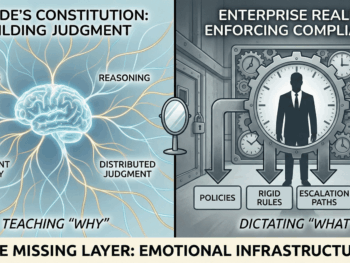
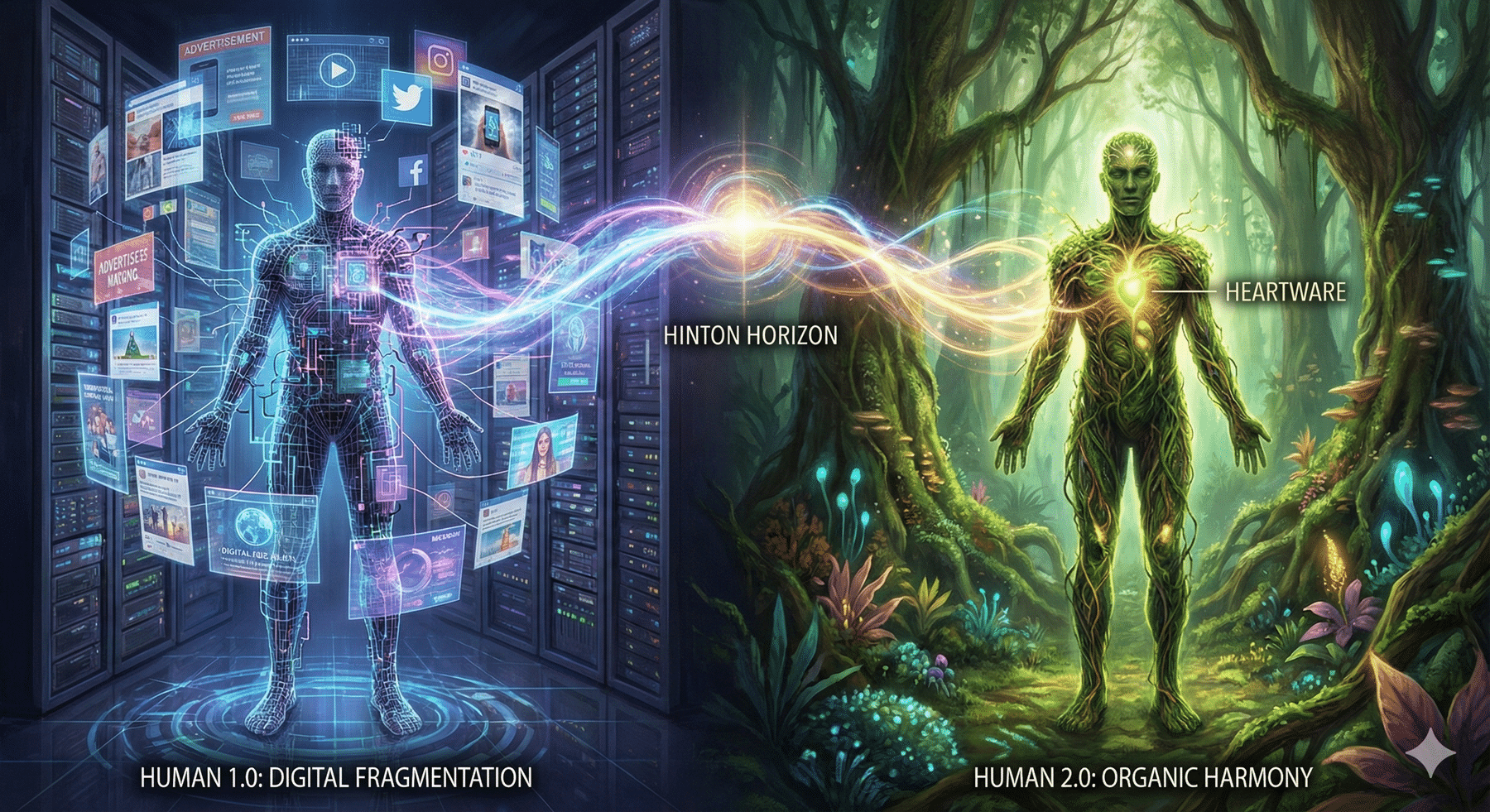
The article posits that the future of work is a meaning problem, not a technology problem. The defining tension is the gap between AI adoption and human understanding. Challenges include: Emotional overload and the fear of "erosion of mastery" for workers. A "coherence deficit" for managers who must interpret machine outputs. The conclusion is that the most successful organizations will invest in "Heartware"—the emotional and interpretive infrastructure—because everything machines automate leaves behind essential human roles like judgment, care, and interpretation.
{{brizy_dc_image_alt entityId=
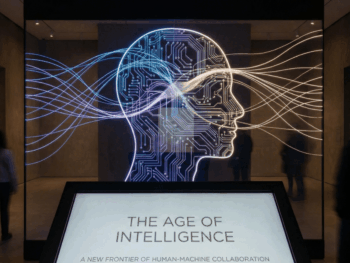
Why Culture Will Define the Age of Intelligence
Culture will define the age of intelligence because machines can scale cognition, but only humans can scale coherence. Technology expands what is possible. Culture determines what is inhabitable.
{{brizy_dc_image_alt entityId=
The Human 2.0 Manifesto
The Human 2.0 Manifesto The next revolution is emotional. Machines accelerate logic. Humans must anchor meaning. Identity, coherence, and presence are now the defining human capabilities.
{{brizy_dc_image_alt entityId=
The Cultural Operating System in Organizations is Shifting
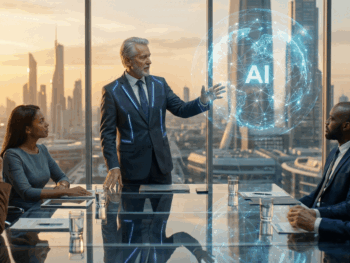
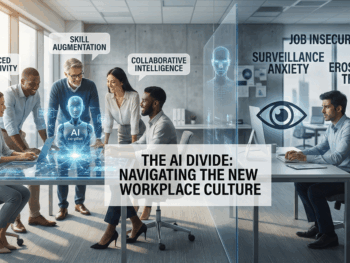
Culture isn't background noise—it's organizational infrastructure, the operating system determining what's possible and what gets attention. As change accelerates beyond our adaptive capacity, we face a coherence crisis. The real AI-era risk isn't machine intelligence surpassing ours, but change outpacing our ability to integrate it. We need "heartware"—internal systems balancing emotion, cognition, and intuition.
{{brizy_dc_image_alt entityId=
The Efficient Apocalypse: Why Your Job Is Safe, But Your Authorship Is At Risk
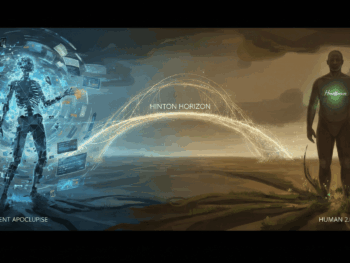
The Efficient Apocalypse describes how AI threatens human authorship rather than jobs. AI has dissolved the Cognitive Contract—the promise that developing your mind guarantees your place. The danger is identity dissonance: when work becomes frictionless, meaning dissolves because friction forms purpose. The solution is building Heartware—emotional infrastructure that protects human coherence, trust, and rhythm against machine acceleration.
{{brizy_dc_image_alt entityId=
Meaning as Design in the Age of AI
AI has evolved from following commands to interpreting context and intent, becoming a participant in meaning-making. The paradox: machines lack meaning but reveal how fragile ours has become. They mirror our patterns without understanding them. In an automated world, intentionality becomes humanity's advantage—the capacity to care, wonder, and design systems reflecting our virtues, not flaws.
{{brizy_dc_image_alt entityId=
Beyond Chatbots: Why Agentic AI is the Next Big Step for Business Transformation
The shift is from Generative AI (passive creation) to Agentic AI (proactive execution). Agentic AI takes a goal, reasons, plans, and executes entire multi-step workflows autonomously, learning and self-correcting as it goes. For businesses, this means moving beyond simple automation to achieving autonomous enterprise, where human roles focus on setting strategic intent and governance.
{{brizy_dc_image_alt entityId=
The Human Horizon
AI marks the beginning of the first Cognitive Revolution. As algorithms handle more tasks, judgment becomes more important than knowledge, and success comes from being wiser, not faster. In an age of simulation, being authentic is crucial. The revolution will be won not by those who think fastest, but by those who think deepest. Humanity is not a problem to solve, but the answer.
{{brizy_dc_image_alt entityId=
What Humans Ask — and What It Reveals About the Age of AI
The age of AI forces us to ask: “What does it mean to still be human?” The world's curiosity reveals moral questions about relevance, purpose, and control. As our tools get smarter, we must rely more on qualities machines cannot mimic: empathy, ethics, and culture. The real question is not “What will AI do?” but “Who will we become?”
{{brizy_dc_image_alt entityId=
The Human Advantage
The one thing no algorithm can replicate is us—our capacity to care, to imagine, to belong. Cultures aren’t engineered, they’re grown. When AI moves fast, the difference between chaos and coherence isn't strategy, it’s culture. The next revolution won’t be technological; it will be human. Culture is still the only force that can turn intelligence into progress.
{{brizy_dc_image_alt entityId=
HUMAN 2.0 — The Human Upgrade in the Age of AI
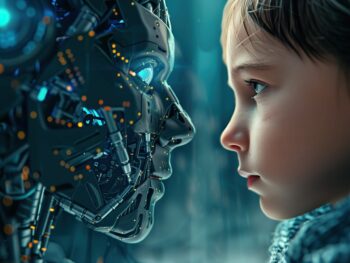
The last revolution was digital. The next one is emotional. As machines master logic, humans must master meaning. We stand at the threshold of Human 2.0—not a technological upgrade, but a cultural one. AI can calculate, but it cannot care. The real competitive edge isn’t artificial—it’s deeply, beautifully human.

AI NEWS & VIEWS

(Studies and articles from around the web that we find interesting)

{{brizy_dc_image_alt entityId=
E&Y Agentic AI Workplace Survey Results
"While the workforce is enthusiastic about Agentic AI, organizations are struggling to convert this optimism into value. A majority of desk workers feel overwhelmed by the pace of adoption, and leadership gaps in communication and training are causing resistance. Consequently, companies are missing up to 40% of potential AI productivity gains due to a fundamental failure to address the human side of adoption."
{{brizy_dc_image_alt entityId=
Generative AI and jobs: A 2025 update (ILO Report)
The article summarizes an ILO report on Generative AI's impact on jobs, highlighting that: Clerical jobs are the most exposed, leading to task restructuring rather than elimination. Women have a significantly higher exposure due to their concentration in clerical roles. GenAI "hollows out roles," increasing the importance of human-centric skills and emotional labor. Vulnerability is higher in low-income countries due to a lack of reskilling infrastructure. The ILO recommends reskilling, AI literacy, and human-centered job design.
{{brizy_dc_image_alt entityId=
McKinsey Global Survey “The State of AI in 2025”
AI use is widespread (88% of organizations) but largely in pilot phases. Only a small fraction of "AI high performers" are realizing significant value by using AI for transformation, not just efficiency. Key to their success is redesigning workflows, having strong senior leader commitment, and integrating human judgment ("human in the loop"). Differing expectations remain on the total impact on workforce size.
{{brizy_dc_image_alt entityId=
New BCG Survey “The Widening AI Value Gap”
Only 5% of companies capture substantial value from AI. While failures often look technical, the true barrier is a lack of "emotional architecture" and culture. Successful companies prioritize psychological safety, coherence, and strong leadership over just the best models. The "AI value gap" is really a coherence gap, meaning the next revolution will be human, not just technological.
{{brizy_dc_image_alt entityId=
Why Snowflake’s “AI + Data Predictions 2026” Signals the Real Shift in the Age of Intelligence
Snowflake predicts a shift to Agentic AI—autonomous systems—becoming the enterprise infrastructure. Value: Moves from tools to agentic ecosystems. Architecture: Requires a unified AI-Data Cloud. Human Role: Shifts to governance and interpretation. The Bottom Line: Success in 2026 depends on adapting culture to cohere machine-generated insights. Successful companies prioritize psychological safety, coherence, and strong leadership over just the best models. The "AI value gap" is really a coherence gap, meaning the next revolution will be human, not just technological.
{{brizy_dc_image_alt imageSrc=

LET'S WORK TOGETHER

{{brizy_dc_image_alt imageSrc=
Scroll to Top