
Your AI Transformation Is Succeeding. That’s the Problem.
Your AI Transformation Is Succeeding. That’s the Problem. Your AI Transformation Is Succeeding. That’s the Problem. “Organizations can become simultaneously […]
Your AI Transformation Is Succeeding. That’s the Problem. Your AI Transformation Is Succeeding. That’s the Problem. “Organizations can become simultaneously […]

Culture isn’t background noise—it’s organizational infrastructure, the operating system determining what’s possible and what gets attention. As change accelerates beyond our adaptive capacity, we face a coherence crisis. The real AI-era risk isn’t machine intelligence surpassing ours, but change outpacing our ability to integrate it. We need “heartware”—internal systems balancing emotion, cognition, and intuition.
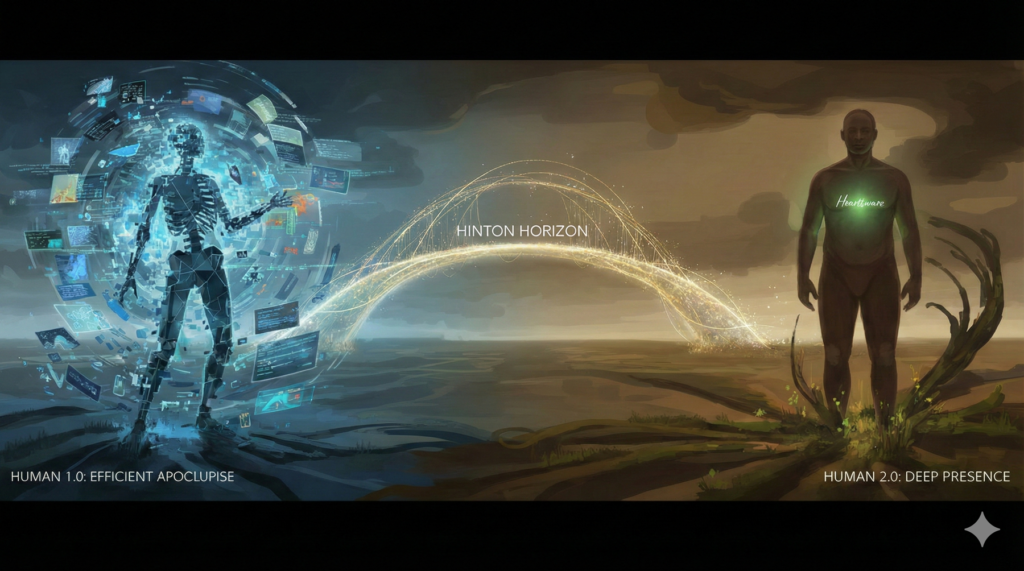
Human 1.0 named the ancient human beneath modern systems. Human 2.0 names the work now required to keep that human intact when intelligence becomes ambient and the pace of change outstrips our ability to form meaning.

Most leadership failures in the age of AI do not announce themselves as failures. Performance often improves before judgment collapses. Decisions move faster, output increases, and systems appear healthy—while human confidence, interpretation, and ownership quietly erode beneath the surface.
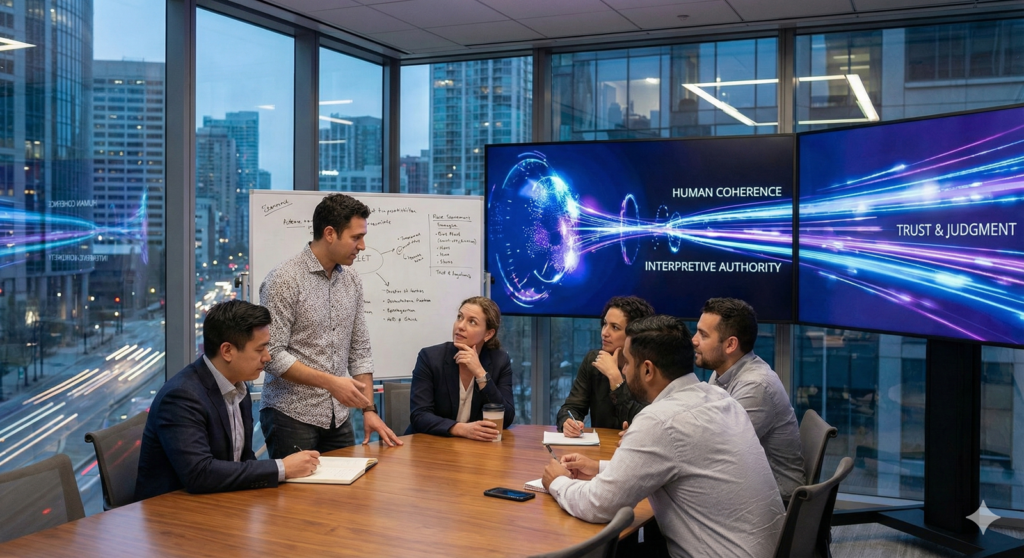
AI does not fail because it lacks intelligence. It fails when speed outruns human judgment. Leadership now is not about producing answers, but about protecting the conditions under which people can trust their own thinking.
The Human 2.0 Manifesto
The next revolution is emotional.
Machines accelerate logic. Humans must anchor meaning.
Identity, coherence, and presence are now the defining human capabilities.